
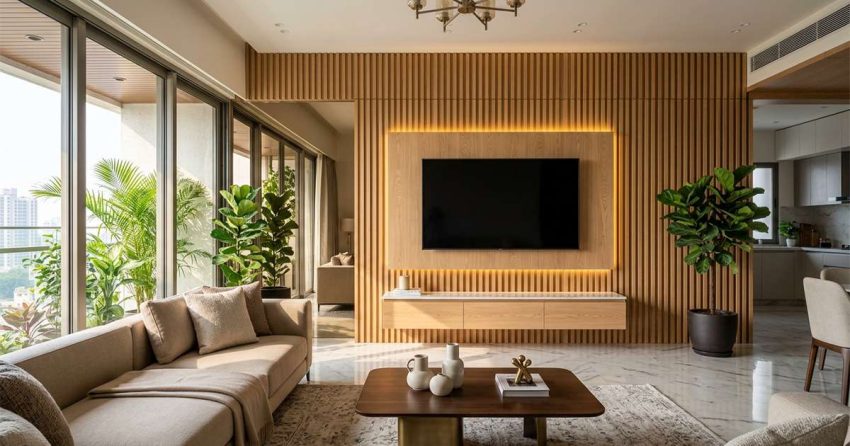
Fluted walls add rhythm through repeated vertical grooves rather than printed pattern or applied ornament. That makes them useful when a room needs texture but still calls for a calm background. The strongest fluted wall ideas control groove width, panel scale, lighting, and placement so the surface feels architectural instead of visually restless.
Why Fluting Creates Texture Without Clutter
Repeated vertical lines create subtle movement as light crosses the surface. From a distance, the wall can read almost like a solid material; up close, the grooves become much more visible.
Fluting can also exaggerate height. Vertical channels naturally draw the eye upward, which makes the treatment useful behind beds, dining areas, media walls, and other locations where stronger vertical emphasis is desirable.
Scale Changes the Mood
Fine fluting feels more detailed and refined. Wider channels usually appear calmer and more architectural because fewer lines are visible across the same wall area.
Choose the Groove and Material Together
Timber fluting introduces natural grain alongside the repeated profile, while painted MDF or plaster-based treatments place more emphasis on shadow than material variation.
When reviewing interior surface ideas, pay attention to how much visual information each material already contains. Strong wood grain combined with narrow fluting may create more activity than a quieter timber or painted finish.
The surrounding room should guide the choice. A space with patterned rugs, detailed stone, and open shelving may benefit from broader, simpler fluting.
Place Fluting Where It Has a Job
A single feature wall usually creates more impact than covering every vertical surface. Behind a bed, fluting can establish a strong headboard zone without requiring additional artwork.
On a media wall, grooves add depth around a television while keeping the composition relatively restrained. Looking at textural interior references can also help when balancing one tactile feature against smoother surfaces elsewhere in the room.
| Fluted Treatment | Best Use | Design Risk |
| Fine painted grooves | Refined feature areas | Can look busy across large walls |
| Wide timber flutes | Warm architectural panels | Grain may add extra movement |
| Half-height fluting | Dining or hallway walls | Needs a clean top termination |
| Full-height panels | Strong vertical emphasis | Can dominate compact rooms |
Stopping fluting at a deliberate boundary matters. Corners, door openings, shelving, and ceiling lines should feel resolved rather than appearing as places where the panel simply ran out.
Let Light Reveal the Texture
Side lighting produces stronger shadows than light falling directly onto the wall. Natural daylight from a nearby window can make the surface change noticeably from morning to evening.
People comparing architectural surface inspiration may see the same basic effect on larger building elements: repeated lines become much more visible when light strikes across them rather than straight on.
Paint sheen matters as well. Matte finishes keep the wall softer, while higher sheen can emphasize each ridge and make minor surface imperfections easier to notice.
When Fluting Starts to Feel Busy
The biggest mistake is treating fluting as a neutral surface regardless of scale. Hundreds of narrow grooves across a large room can create almost as much visual activity as patterned wallpaper.
Repeating the detail on cabinets, walls, doors, islands, and furniture compounds the problem. Choose one or two places where the rhythm has a clear purpose.
Another issue is dust. Deep horizontal ledges aren’t created, but pronounced grooves can still require more careful cleaning than a flat painted wall, especially in kitchens or high-traffic areas.
Frequently Asked Questions
Are fluted walls suitable for small rooms?
Yes. Using the treatment on one focused area can add depth without consuming floor space. Wider grooves and a wall-matching paint color usually create a quieter effect than narrow, high-contrast fluting.
Can fluted panels go behind a television?
They can, but cable access, mounting hardware, ventilation, and future equipment changes should be planned first. A removable section or service zone can make later adjustments easier.
Should fluted walls match the floor?
They don’t need to match. With timber panels, a related undertone is often enough. Exact wood matching can make the room feel overly coordinated, while a controlled contrast usually looks more natural.
Give Texture One Clear Role
Fluted wall ideas are most effective when the grooves serve a specific part of the composition. Select the scale in response to wall size, test how daylight creates shadows, and resist repeating the treatment everywhere. Used selectively, fluting gives a room tactile character while preserving the calm appearance that makes the detail appealing in the first place.