
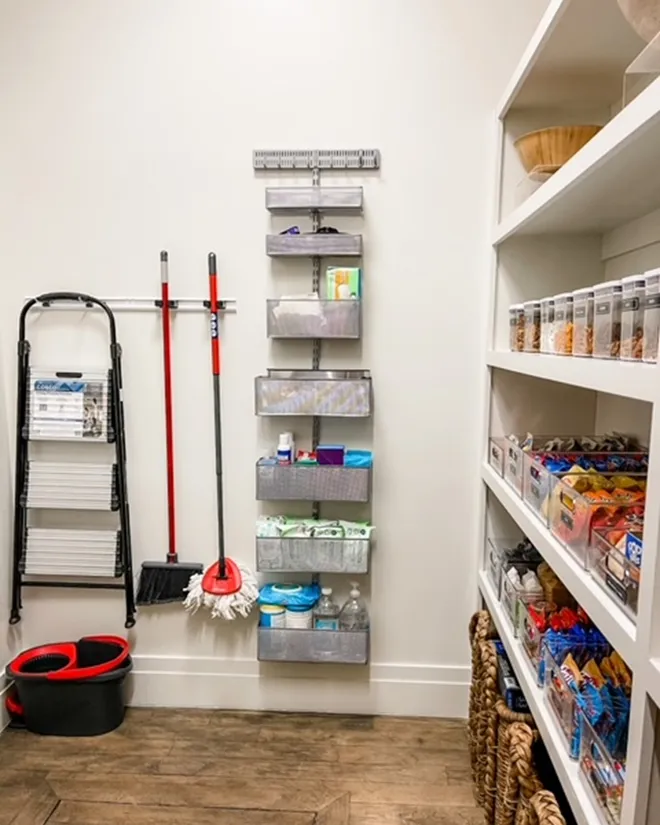
Brooms, mops, vacuums, dusters, and buckets are difficult to store because they are tall, irregularly shaped, and used in different parts of the home. Practical cleaning tool storage ideas use vertical space, secure long handles, and give bulky appliances enough clearance so the closet does not become a pile of equipment.
Start With the Tallest and Bulkiest Tools
Measure the vacuum and the full length of brooms and mops before reorganizing a utility closet. These pieces determine how much vertical clearance is needed.
Freestanding vacuums often need floor space, while stick vacuums may work better on wall-mounted charging brackets. Brooms and mops can usually be lifted off the floor entirely.
General utility-room planning can provide useful ideas for arranging these awkward items alongside laundry or household supplies.
Use Wall Space for Long Handles
Wall-mounted grip racks are one of the simplest ways to organize brooms and mops. They keep handles upright and stop tools from sliding across the floor.
Leave Space Between Damp Tools
Wet mop heads should have enough airflow to dry before being enclosed. Crowding damp cleaning tools together can create odors and make the storage area unpleasant.
Broader home storage guidance may help when adapting narrow walls, door backs, or utility-room corners that would otherwise remain unused.
| Tool | Storage Method | Main Benefit |
|---|---|---|
| Broom | Grip rack | Keeps handle upright |
| Mop | Wall hook | Allows drying space |
| Stick vacuum | Charging mount | Saves floor area |
| Bucket | Floor or shelf | Holds accessories |
Give the Vacuum a Dedicated Parking Spot
Full-size vacuums need a clear footprint. Do not surround them with bottles, baskets, or loose cords that must be moved every time cleaning begins.
If attachments regularly get lost, store them in a nearby bin or wall-mounted pouch. Corded vacuum cables should be wrapped according to the appliance’s design rather than pushed loosely into the closet.
Ideas from functional living ideas can also help when deciding whether a vacuum belongs in a central closet or closer to the floor where it is used most.
Use Shelves for Smaller Cleaning Equipment
Handheld dusters, microfiber cloths, scrub brushes, disposable refills, and spare vacuum attachments can be separated into labeled bins. Keeping them above floor level prevents them from disappearing behind larger tools.
A portable cleaning caddy is useful for products that move from room to room. Keep only routine items inside it so it remains light enough to carry.
Buckets can often double as storage for nonchemical accessories, but avoid creating a deep mixed container that has to be emptied whenever one brush is needed.
Where Cleaning Closets Commonly Fail
A major mistake is using every inch of available space. Cleaning tools need room to move in and out without knocking over nearby items.
Another problem is putting wet, dirty, and clean supplies together. Give damp tools a drying area and keep clean replacement cloths separate. Avoid placing household chemicals where children or pets can reach them, and follow the product label for storage requirements.
A slightly emptier closet usually works better than a completely packed one.
Frequently Asked Questions
How do I store brooms without a utility closet?
Use a wall-mounted grip rack in a laundry area, pantry side wall, garage, or other suitable utility space. A narrow freestanding broom cabinet can also work where wall mounting is not practical.
Can mops be stored while they are wet?
It is better to let mop heads dry before placing them in a tightly enclosed area. Hanging them with space for airflow can reduce lingering moisture and odors.
Where should vacuum attachments be kept?
Store attachments near the vacuum in a small bin, hanging pouch, or dedicated shelf container. Keeping them close to the appliance makes them easier to find and return after use.
Create a Utility Zone That Stays Usable
Cleaning storage works best when tall handles are lifted off the floor and bulky appliances have permanent parking spaces. Add small bins for attachments and portable supplies, but resist filling every shelf. A little open space makes the closet easier to use and gives wet tools enough room to dry before the next cleaning session.