
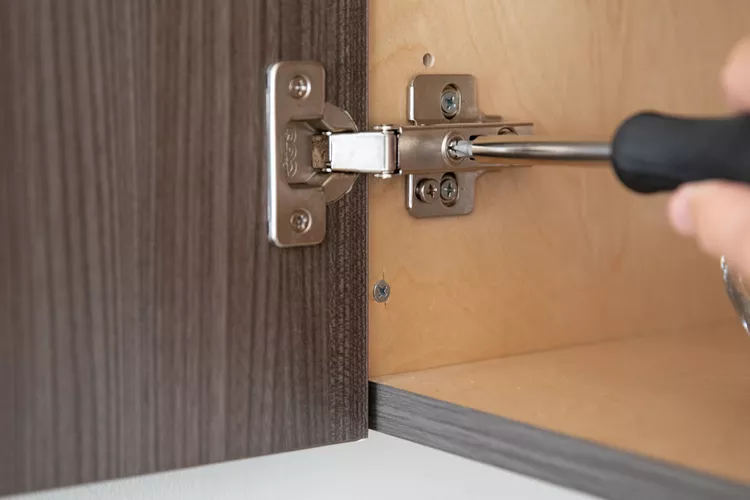
A cabinet door that suddenly rubs, hangs unevenly, or refuses to close cleanly usually needs adjustment rather than force. Cabinet hinge maintenance starts with identifying whether the problem comes from loose screws, hinge alignment, door weight, damaged mounting holes, or movement in the cabinet itself.
Examine the Door Before Turning Screws
Open and close the door slowly while watching the gap around every edge. Note whether the door drops toward the handle side, touches the neighboring door, scrapes the cabinet frame, or sits too far forward.
Loose mounting screws are common, but tightening everything without checking alignment can make the door harder to adjust afterward. Start by identifying the direction of the problem.
Useful home improvement references often emphasize routine inspection, which is particularly helpful for hardware that moves many times each day.
Understand What Adjustable Hinges Can Change
Many concealed cabinet hinges provide separate adjustments for side-to-side position, depth, and sometimes height. Small turns can produce noticeable movement, so make changes gradually.
Adjust one direction at a time and close the door after each change. This makes it easier to understand which screw is affecting the alignment.
Compare the Gaps Between Doors
Even spacing is a useful reference point. If one door has shifted, compare it with nearby doors rather than judging the problem only by whether it closes.
Homeowners interested in kitchen fixture and cabinet topics can use these visual gaps as a simple way to spot alignment changes early.
| Door Problem | Possible Cause | First Check |
|---|---|---|
| Door sags | Loose hinge or screw | Mounting screws |
| Door rubs beside it | Side alignment | Adjustment screw |
| Door sits outward | Depth setting | Hinge position |
| Screw won’t tighten | Damaged hole | Mounting material |
Tighten Loose Hardware Carefully
Use a screwdriver that fits the screw head correctly. Tighten loose fasteners until secure, but don’t keep turning once the screw is seated firmly.
If a screw spins without tightening, the mounting hole may be stripped. Continuing to turn it won’t restore the grip and can enlarge the damaged area.
For coordinated maintenance around the room, home organization and design ideas can complement routine checks of doors, drawers, and frequently handled fittings.
Repair the Cause of Repeated Sagging
A hinge that constantly works loose may be attached to damaged material or supporting a door that places too much stress on the mounting points. The hinge itself may also be bent or worn.
Check All Hinges on the Same Door
Adjusting only the most obvious hinge can create uneven loading. Inspect the top, middle, and lower hinges so the door remains supported along its full height.
If the cabinet box has shifted or become loose, hinge adjustment alone may not keep the door aligned.
What People Often Get Wrong
A rubbing door doesn’t always need trimming. Removing material from the door should not be the first response when the problem is simply a loose or misadjusted hinge.
Another mistake is making several large adjustments at once. If the door moves too far in multiple directions, it becomes difficult to tell which change helped. Small adjustments, followed by repeated test closing, give you much more control.
Frequently Asked Questions
Why does my cabinet door keep sagging?
Loose screws, worn hinges, stripped mounting holes, heavy doors, or movement in the cabinet can all contribute. Inspect the hardware and attachment points before repeatedly readjusting the hinge.
Can concealed cabinet hinges be adjusted?
Many can. Depending on the hinge design, separate screws may control side position, depth, and mounting height. Make small changes and test the door frequently.
Should cabinet hinges be lubricated?
Some hinges may benefit from a small amount of suitable lubricant if they squeak or move stiffly. Keep excess lubricant away from cabinet finishes and wipe off any residue.
Make Small Adjustments Before Bigger Repairs
A sagging cabinet door is usually easier to correct when you respond to the first signs of rubbing or uneven gaps. Check screw tightness, inspect mounting holes, and adjust concealed hinges in small increments. If the same problem quickly returns, investigate the hinge, cabinet structure, and mounting material instead of continuing to turn adjustment screws. Stable hardware should hold its alignment during ordinary use.