
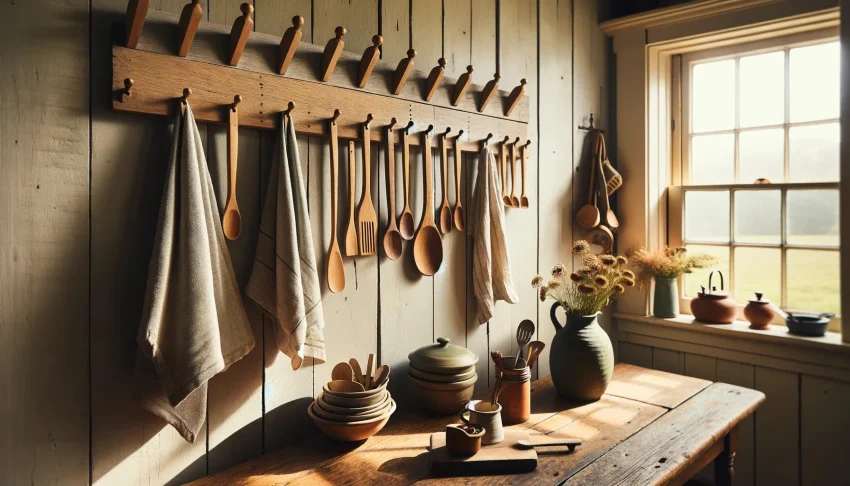
Peg rails bring order to a wall without the visual weight of cabinets or deep shelving. Their simple horizontal form works particularly well in rooms where storage needs to remain accessible while still contributing warmth, rhythm, and traditional character.
Use Peg Rails as Part of the Architecture
A rail looks most convincing when it feels connected to the room rather than applied as an afterthought. Aligning it with door trim, paneling, shelving, or another strong horizontal line can create that effect.
Painted rails can blend into the wall, while natural wood creates contrast and makes the pegs more noticeable.
During general decorating research, look beyond individual accessories and notice how storage relates to architectural lines.
Choose Items Worth Keeping Visible
Peg rails put belongings on display, so they’re best for objects that can remain visually calm. Linen aprons, woven bags, hats, light jackets, brushes, and simple baskets often work well.
Highly colorful packaging or tangled equipment may be better behind a door.
| Room | Useful Peg-Rail Storage | Visual Approach |
|---|---|---|
| Kitchen | Aprons, towels | Keep items lightweight |
| Entry | Hats, bags | Leave open gaps |
| Bedroom | Robes, accessories | Coordinate textiles |
| Laundry | Brushes, small bags | Favor practical items |
Add Hanging Baskets for Smaller Objects
Small belongings that can’t hang directly from a peg can still use the rail. Lightweight baskets or fabric pouches create secondary storage for accessories, clothespins, gloves, or other loose pieces.
Don’t overload every peg. A few open spaces help the whole installation look intentional.
While exploring online room inspiration, pay attention to how negative space prevents functional storage from becoming visually dense.
Extend the Rail Across a Wider Wall
A long rail can turn storage into an architectural feature. Instead of installing a short section beside a doorway, consider whether a continuous run could visually unify the wall.
The extra pegs don’t all need to be occupied. Empty pegs maintain flexibility for guests, seasonal items, or changing routines.
Broader style research online can provide ideas for proportions, but measure your own wall carefully so the rail relates naturally to nearby doors and furniture.
Where Peg Rails Can Go Wrong
The traditional appearance can tempt people to prioritize style over capacity. Small wooden pegs may not be appropriate for heavy backpacks, loaded totes, or bulky equipment unless the rail and fixings are designed for that weight.
Overstyling is another issue. If every peg carries a decorative object, the rail can start to resemble a display wall instead of useful storage. Keep function in control.
Frequently Asked Questions
What is the difference between a peg rail and a hook rail?
A peg rail typically uses simple projecting wooden pegs integrated into a horizontal board, while hook rails may use separate metal or shaped hooks. Both serve similar storage purposes.
Should a peg rail match the wall color?
It can. Matching paint creates a subtle built-in effect, while contrasting wood or color turns the rail into a stronger decorative element.
Can peg rails be used in small rooms?
Yes. Their shallow profile makes them useful where floor-standing furniture would consume too much space, particularly in narrow entries, bedrooms, kitchens, and utility areas.
Keep the Simplicity Working
Peg rails are most appealing when they remain uncomplicated. Install the rail where hanging storage will genuinely help, choose objects that can stay visible without creating chaos, and leave some pegs empty. That restraint allows the rail’s traditional character to show while keeping everyday storage flexible and easy to use.